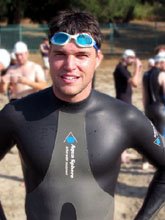
Big News! A few days before embarking on my trip to Lapland, I got an email from Lou Schuler, whom most of you will know as the author of The New Rules of Lifting, former fitness editor for Men’s Health, Men’s Fitness, and general fitness guru, as well as the proprietor of the “Male Pattern Fitness” blog.
Lou recently got an offer he couldn’t refuse from a site called T-Nation, which I’ve mentioned here numerous times. Apparently he’ll be overseeing much of their editorial material, encouraging all the fledgling strength coaches and exercise physiologists out there to spread their wings, fly, and share with all the fitness geeks out there all the newest secrets to getting the Bodies They Want and Rightfully Deserve. Sounds like a great gig, and something he’s ideally cut out for.
Due to his new obligations, though, Big Lou is stepping down as from his post as “Male Pattern Fitness” blogger and has asked me to take over for him.
And I said yes.
That doesn’t mean much for most people reading this: just that from now on you’ll be hitting up the MPF site instead of this one for my latest ramblings about fitness. (I’ll figure out some fancy way that this site will automatically redirect you anyway, so it will be an even smoother transition). I will most assuredly be updating that site more often than I’ve been doing this one—particularly lately—in part because the overseers of that site expect me to, but mostly because I’ll hopefully be inheriting many of Lou’s readers over there and they’ll probably expect me to keep up something approximating Lou’s furious blogging pace, heaven help me, and I hope not to let them down too horribly.
I’ve enjoyed keeping up this blog, have enjoyed the crosstalk with many readers on this site, and I hope that you’ll all join me over at MPF starting later this week.
I’d like to add in closing—and, I imagine, REALLY closing-- that I’m very pleased and rather flattered that Lou has asked me to fill his shoes. When I first read ‘The New Rules of Lifting’ years ago I remember thinking, “Not only is this guy informed to the gills but the dude can WRITE, too.” Turned out I already had two of his other books on my shelf. As far as I’m concerned, Lou continues to set the standard for fitness writing that is smart, engaging and, improbably, hilarious. Without his much-imitated style to make it go down easy, it’s all just a bunch of sets and reps, and really, who but the most geekish among us cares about that stuff?
I started reading his blog right around that time, and shortly thereafter started this one, which, if case no one has noticed, owes a lot in form and content to The Big Man himself. Lou has nurtured along some of the biggest names in the fitness world, encouraging them, presenting them opportunities, and, I gather, kicking them in the butt once in a while, and I gotta say now I’m honored to be among them. So—thanks, Lou. Stop by any time.
Everyone else: Male Pattern Fitness-ho! See you over there later this week.
--Andrew
Showing posts with label T-Nation. Show all posts
Showing posts with label T-Nation. Show all posts
Tuesday, July 08, 2008


Saturday, January 05, 2008
Aragon Alert!
Well, I’ve taken myself a nice long break from the world of blogging, and it’s time I got myself back in the saddle. No excuse, really, except holiday sluggishness.
What finally got me going again was an email from my colleague Alan Aragon, a nutritionist and dietician whose seminar I attended (and discussed here) about a year ago. I don’t know Alan that well, but I really liked his angle on things: he never takes studies or trends or whoop-di-do ideas at face value. Whenever some new gem pops up in the fitness world—particularly as it pertains to diet—Aragon will crank it through the meat-grinder of his own perceptive and freakishly well-informed mind and come up with the straight skinny for those of us more credulous types without a thousand letters after our names and the patience and wherewithal to sort the dross from the genuinely substantial.
A skeptic among the faithful is a valuable commodity: what good would the first STAR WARS movies have been without Han Solo, the wisecracker in the background undermining every starry-eyed platitude about The Force that Mark Hamill takes in with such puppyish enthusiasm. When Solo starts to believe—even a little bit—at the end of the first movie, we start to think, hey, maybe Obi-Wan was onto something.
And do we ever need our skeptics in the fitness world. If the responses to my CrossFit post from a few weeks ago tells me nothing else, it’s that for many people, a fitness program is tantamount to a religion (T.C. Luoma has an ever-profane take on this same topic here). My swipes at Intelligent Design and my comments about presidential candidates didn’t meet with anything near the deluge of protest I received when I opined that every single person in the known universe may not have all their fitness needs and dreams and desires entirely satisfied by CrossFit. With a tip of the hat to Ray Kybartas, for many—hey, maybe for ME—fitness is a religion.
Without the Alan Aragons out there to check and challenge us (and there are others out there, too!), we fitness types would be a bunch of snake-oil charletons, getting by on a shoeshine and a smile.
So it was great to hear from him. The email in question included a sample of his newest project: a monthly newsletter called the ALAN ARAGON RESEARCH REVIEW. From this first issue, I gather Alan’s intention is to sum up the latest studies in the science rags and lay journals and pretty much sort it all out for us: the AARR will tell us which studies make sense, which ones don’t, which ones are laughably biased or fatally flawed, and the few-and-far-between that represent real innovation.
Much of this information would be available to anyone inclined to pore through all of it, it’s just that so few of us ARE. I’ve been a member of the NSCA for a couple of years now, and one of the big perks is receiving a huge tome of studies on diet and exercise methodologies every month. I always tear into my latest issue of the JOURNAL OF STRENGTH AND CONDITIONING with gusto, only to glaze over after reading a handful of abstracts. Sure, the folks at NSCA are doing valuable work, and for heaven’s sake, they should go on with it. But for the most part, they’re the theoretical physicists, toiling away at the outer reaches of this field, coming up with theories that are well beyond the pale of usage for average gym-goers like you and me.
Some of the studies offer definitive proof in the roundness of the world, the existence of gravity, or the greenness of grass. Others modify common knowledge so slightly and tentatively that the results are almost meaningless. But ever so often, I’ll come across a study or two that sees to be saying something really groundbreaking, but I’m just so unscientifically inclined that it’s sometimes tough to be sure that I’m reading what I think I’m reading.
Now, there are plenty of lay resources out there, too, which are clearly written and easy to understand, but there you have the opposite problem: whereas science journals offer tons of substance with precious little application (“Effects of Post-Exercise L-Glutamine Supplementation on Amino Acid Uptake in Hypoglycemic College Pole-Vaulters”); many lay resources offer tons of application of questionable substance (“Lose 25 Pounds of Flab in Eight Days!”).
So what’s to do? Stuck between reams of impenetrable science on one side and glossy pages of empty promises on the other, the average fitness Joe might feel inclined to throw up his hands and settle in for an afternoon of Captain Kangaroo and bon-bons. But Alan’s RESEARCH REVIEW pulls it all together. He’ll tell you if a study on the benefits of Snickers bars was sponsored by Hershey, or if the article about the dangers of soy was underwritten by the National Council for the Advancement of Carnivorism. Want to know what’s new, what’s hip and most importantly, what’s EFFECTIVE in the fitness world? Check it out. Alan’s one of the good guys.
What finally got me going again was an email from my colleague Alan Aragon, a nutritionist and dietician whose seminar I attended (and discussed here) about a year ago. I don’t know Alan that well, but I really liked his angle on things: he never takes studies or trends or whoop-di-do ideas at face value. Whenever some new gem pops up in the fitness world—particularly as it pertains to diet—Aragon will crank it through the meat-grinder of his own perceptive and freakishly well-informed mind and come up with the straight skinny for those of us more credulous types without a thousand letters after our names and the patience and wherewithal to sort the dross from the genuinely substantial.
A skeptic among the faithful is a valuable commodity: what good would the first STAR WARS movies have been without Han Solo, the wisecracker in the background undermining every starry-eyed platitude about The Force that Mark Hamill takes in with such puppyish enthusiasm. When Solo starts to believe—even a little bit—at the end of the first movie, we start to think, hey, maybe Obi-Wan was onto something.
And do we ever need our skeptics in the fitness world. If the responses to my CrossFit post from a few weeks ago tells me nothing else, it’s that for many people, a fitness program is tantamount to a religion (T.C. Luoma has an ever-profane take on this same topic here). My swipes at Intelligent Design and my comments about presidential candidates didn’t meet with anything near the deluge of protest I received when I opined that every single person in the known universe may not have all their fitness needs and dreams and desires entirely satisfied by CrossFit. With a tip of the hat to Ray Kybartas, for many—hey, maybe for ME—fitness is a religion.
Without the Alan Aragons out there to check and challenge us (and there are others out there, too!), we fitness types would be a bunch of snake-oil charletons, getting by on a shoeshine and a smile.
So it was great to hear from him. The email in question included a sample of his newest project: a monthly newsletter called the ALAN ARAGON RESEARCH REVIEW. From this first issue, I gather Alan’s intention is to sum up the latest studies in the science rags and lay journals and pretty much sort it all out for us: the AARR will tell us which studies make sense, which ones don’t, which ones are laughably biased or fatally flawed, and the few-and-far-between that represent real innovation.
Much of this information would be available to anyone inclined to pore through all of it, it’s just that so few of us ARE. I’ve been a member of the NSCA for a couple of years now, and one of the big perks is receiving a huge tome of studies on diet and exercise methodologies every month. I always tear into my latest issue of the JOURNAL OF STRENGTH AND CONDITIONING with gusto, only to glaze over after reading a handful of abstracts. Sure, the folks at NSCA are doing valuable work, and for heaven’s sake, they should go on with it. But for the most part, they’re the theoretical physicists, toiling away at the outer reaches of this field, coming up with theories that are well beyond the pale of usage for average gym-goers like you and me.
Some of the studies offer definitive proof in the roundness of the world, the existence of gravity, or the greenness of grass. Others modify common knowledge so slightly and tentatively that the results are almost meaningless. But ever so often, I’ll come across a study or two that sees to be saying something really groundbreaking, but I’m just so unscientifically inclined that it’s sometimes tough to be sure that I’m reading what I think I’m reading.
Now, there are plenty of lay resources out there, too, which are clearly written and easy to understand, but there you have the opposite problem: whereas science journals offer tons of substance with precious little application (“Effects of Post-Exercise L-Glutamine Supplementation on Amino Acid Uptake in Hypoglycemic College Pole-Vaulters”); many lay resources offer tons of application of questionable substance (“Lose 25 Pounds of Flab in Eight Days!”).
So what’s to do? Stuck between reams of impenetrable science on one side and glossy pages of empty promises on the other, the average fitness Joe might feel inclined to throw up his hands and settle in for an afternoon of Captain Kangaroo and bon-bons. But Alan’s RESEARCH REVIEW pulls it all together. He’ll tell you if a study on the benefits of Snickers bars was sponsored by Hershey, or if the article about the dangers of soy was underwritten by the National Council for the Advancement of Carnivorism. Want to know what’s new, what’s hip and most importantly, what’s EFFECTIVE in the fitness world? Check it out. Alan’s one of the good guys.
Thursday, June 28, 2007
Exhortation to Exploration
There was a recent article on that 'We-Don't-Allow-No-Sissies' strength-training site, T-nation, about fragmentation within the strength-training community. T.C. Luoma argues that powerlifters and bodybuilders don't get along; figure models and female bodybuilders give each other the cold shoulder; mixed martial artists and practitioners of CrossFit stare angrily at one another from across the protein-shake bar. And no one serious about lifting weights wants to have much to do with those beanpole endurance athletes like runners or triathletes -- what are THEY trying to prove, anyway?
Now, you might not know who all these hypertrophied characters are -- suffice it to say that they're all variations on mesomorph types you wouldn't want to trifle with. I agree with Louma's point about the cliquey behavior of the different groups -- while at the same time still believing that, as Lou Schuler has suggested, there are more similarities than differences among their training methods. The serious rift, as I see it, is not how much resentment the average Powerlifter Pete has for the average Bodybuilding Bob, but rather their mutual disdain -- indeed, xenophobia -- for Pilates Priscilla, and other practitioners of different movement methodologies altogether.
And that's a shame, because looking outside the box -- and I mean WAY outside -- can cast fascinating new light on our usual, day-to-day practice, whether that involves lifting enormous amounts of weight, hitting a golf ball, spear fishing, or playing lawn darts. I'm not just talking about switching to a 4-iron or doing three sets of eight instead of two sets of fifteen. I'm talking about putting down the clubs and dumbells altogether and spending some time sitting at the feet of someone whose perspective you've never even considered.
Quick example: years ago I saw a video on something called the Alexander Technique, a movement system founded by an actor named F.M. Alexander who had a chronic problem with losing his voice on stage. Observing his own behavior carefully, he found that his neck and shoulders became tense whenever he made an entrance, constricting his breath and tightening his vocal cords when he spoke, and thus causing his frequent bouts of laryngitis.
To alleviate the problem, he developed a system of physical actions, reinforced by simple, internal verbal cues that counteracted his natural tendency towards tension. As a result of these cues, and the physical awareness they helped him develop, not only did his voice remain strong, but he found that he was far more energetic and spontaneous on stage, and far less exhausted afterwards. Codifying the technique, Alexander began teaching other performers, and they, too, began to move more freely and easily. Virtually all his students reported that any chronic pain they had been experiencing had disappeared, and that their physical endeavors now seemed smooth and natural.
All well and good, you say: Alexander's work may have relevance for performers who need to project an air of effortless relaxation on stage; but what about people who have to to produce real physical force, such as athletes and powerlifters? Does it help them?
The answer appears to be yes: perhaps the most striking aspect of the video was the footage of one of Alexander's disciples working with a karate practitioner who seemed tense and clumsy while performing his fighting moves. After the instructor made some simple adjustments to the man's neck, head and shoulders, his moves were not only flowing and energized, but clearly more powerful and effective as well. Though seemingly soft and internal in its approach, Alexander's methods also work well for practitioners of harder arts as well.
Apparently, the solution to getting stronger or faster, and perhaps leaner and more muscular, may not always lie in pushing harder and faster, but also in learning to work on a deeper, subtler level, to broaden one's awareness from simple, gross muscle movements to an almost dancer-like awareness of the entire body in motion.
The Alexander Technique is really just one of dozens of movement methods that are out there to be studied and learned from. For years I thought that a standard standing toe-touch was an effective hamstring stretch -- until I went to my first yoga class and discovered that I'd really just been reinforcing bad posture by over-flexing my spine. Leading back expert Stuart McGill has recently shown that people with back pain usually have stronger back muscles than people who are pain-free, thus debunking the common belief that strengthening the back will help alleviate pain. His solution? A series of fine-motor control movements that help his clients develop greater sensitivity, firing the correct muscles in the correct sequence for pain-free movement. Among his recommendations is advice on how to activate your tongue muscles for improved alignment!
Discussing tongue placement is not something that occurs to many strength and conditioning coaches (and no one, and I mean no one, has a mustache like McGill's).
In the ten-year period during which I practiced the martial arts, I must have studied with a dozen different teachers, all masters of one art or another. Occasionally I'd hear one of them enthusiastically recommend something that another teacher had vehemently rejected: a hand or foot placement during a block or a strike, perhaps, a particular style of footwork, maybe something about the optimal distance between you and an attacker. I liked hearing about the differing points of view because it reinforced my sense that the body's expressiveness was virtually limitless, that a given technique could be both foolish and brilliant, indispensable and execrable, depending on the context, point of view, and particular inclination of a given practitioner in a given moment.
The take-home lesson for muscleheads -- and as a 20-year veteran of strength training I'll happily include myself in that group -- is that we need to come out of our crustaceous, hypertrophied shells a bit and realize that in order to grow more, get stronger, and function ever more effectively, we'd do well to occasionally investigate entirely different schools of thought than the ones we're used to. I'd say that same to anyone who practices yoga and avoids strength training lest they "tighten up" or a t'ai chi master who refuses to experiment with kung fu lest it interfere with their perfectly balanced chi.
Even the smallest towns have master movement teachers out there, quietly passing on their lifetime of knowledge to anyone with an couple of free evenings a week. Seek them out. Let them open your mind a bit. Get out of your comfort zone. You'll probably get a lot out of the class, be smarter for it, and find a new perspective on your game of choice as well.
And they'll probably learn a lot from you, too.
(Last minute edit: Just read a new piece by T.C. Luoma in T-Nation that mentions tongue positioning during ab exercises! Oh, sweet irony!)
Now, you might not know who all these hypertrophied characters are -- suffice it to say that they're all variations on mesomorph types you wouldn't want to trifle with. I agree with Louma's point about the cliquey behavior of the different groups -- while at the same time still believing that, as Lou Schuler has suggested, there are more similarities than differences among their training methods. The serious rift, as I see it, is not how much resentment the average Powerlifter Pete has for the average Bodybuilding Bob, but rather their mutual disdain -- indeed, xenophobia -- for Pilates Priscilla, and other practitioners of different movement methodologies altogether.
And that's a shame, because looking outside the box -- and I mean WAY outside -- can cast fascinating new light on our usual, day-to-day practice, whether that involves lifting enormous amounts of weight, hitting a golf ball, spear fishing, or playing lawn darts. I'm not just talking about switching to a 4-iron or doing three sets of eight instead of two sets of fifteen. I'm talking about putting down the clubs and dumbells altogether and spending some time sitting at the feet of someone whose perspective you've never even considered.
Quick example: years ago I saw a video on something called the Alexander Technique, a movement system founded by an actor named F.M. Alexander who had a chronic problem with losing his voice on stage. Observing his own behavior carefully, he found that his neck and shoulders became tense whenever he made an entrance, constricting his breath and tightening his vocal cords when he spoke, and thus causing his frequent bouts of laryngitis.
To alleviate the problem, he developed a system of physical actions, reinforced by simple, internal verbal cues that counteracted his natural tendency towards tension. As a result of these cues, and the physical awareness they helped him develop, not only did his voice remain strong, but he found that he was far more energetic and spontaneous on stage, and far less exhausted afterwards. Codifying the technique, Alexander began teaching other performers, and they, too, began to move more freely and easily. Virtually all his students reported that any chronic pain they had been experiencing had disappeared, and that their physical endeavors now seemed smooth and natural.
All well and good, you say: Alexander's work may have relevance for performers who need to project an air of effortless relaxation on stage; but what about people who have to to produce real physical force, such as athletes and powerlifters? Does it help them?
The answer appears to be yes: perhaps the most striking aspect of the video was the footage of one of Alexander's disciples working with a karate practitioner who seemed tense and clumsy while performing his fighting moves. After the instructor made some simple adjustments to the man's neck, head and shoulders, his moves were not only flowing and energized, but clearly more powerful and effective as well. Though seemingly soft and internal in its approach, Alexander's methods also work well for practitioners of harder arts as well.
Apparently, the solution to getting stronger or faster, and perhaps leaner and more muscular, may not always lie in pushing harder and faster, but also in learning to work on a deeper, subtler level, to broaden one's awareness from simple, gross muscle movements to an almost dancer-like awareness of the entire body in motion.
The Alexander Technique is really just one of dozens of movement methods that are out there to be studied and learned from. For years I thought that a standard standing toe-touch was an effective hamstring stretch -- until I went to my first yoga class and discovered that I'd really just been reinforcing bad posture by over-flexing my spine. Leading back expert Stuart McGill has recently shown that people with back pain usually have stronger back muscles than people who are pain-free, thus debunking the common belief that strengthening the back will help alleviate pain. His solution? A series of fine-motor control movements that help his clients develop greater sensitivity, firing the correct muscles in the correct sequence for pain-free movement. Among his recommendations is advice on how to activate your tongue muscles for improved alignment!
Discussing tongue placement is not something that occurs to many strength and conditioning coaches (and no one, and I mean no one, has a mustache like McGill's).
In the ten-year period during which I practiced the martial arts, I must have studied with a dozen different teachers, all masters of one art or another. Occasionally I'd hear one of them enthusiastically recommend something that another teacher had vehemently rejected: a hand or foot placement during a block or a strike, perhaps, a particular style of footwork, maybe something about the optimal distance between you and an attacker. I liked hearing about the differing points of view because it reinforced my sense that the body's expressiveness was virtually limitless, that a given technique could be both foolish and brilliant, indispensable and execrable, depending on the context, point of view, and particular inclination of a given practitioner in a given moment.
The take-home lesson for muscleheads -- and as a 20-year veteran of strength training I'll happily include myself in that group -- is that we need to come out of our crustaceous, hypertrophied shells a bit and realize that in order to grow more, get stronger, and function ever more effectively, we'd do well to occasionally investigate entirely different schools of thought than the ones we're used to. I'd say that same to anyone who practices yoga and avoids strength training lest they "tighten up" or a t'ai chi master who refuses to experiment with kung fu lest it interfere with their perfectly balanced chi.
Even the smallest towns have master movement teachers out there, quietly passing on their lifetime of knowledge to anyone with an couple of free evenings a week. Seek them out. Let them open your mind a bit. Get out of your comfort zone. You'll probably get a lot out of the class, be smarter for it, and find a new perspective on your game of choice as well.
And they'll probably learn a lot from you, too.
(Last minute edit: Just read a new piece by T.C. Luoma in T-Nation that mentions tongue positioning during ab exercises! Oh, sweet irony!)
Subscribe to:
Posts (Atom)